
The Emerging Quantum Threat: Preparing for Quantum-Enabled Cyberattacks in the Next Decade
Quantum computing has long been recognized as a technology with transformative potential. Yet, a weak signal gaining traction in cybersecurity circles is the looming threat of quantum-enabled cyberattacks. As quantum computers become more capable, they could potentially break current encryption standards, drastically disrupting cybersecurity frameworks across industries. Understanding this nascent development is critical for organizations aiming to future-proof their strategic intelligence and risk management approaches.
What’s Changing?
Quantum computing is advancing incrementally but persistently. While quantum technology has yet to deliver widespread commercial applications, its trajectory suggests that within the next 5 to 20 years, quantum systems may be sufficiently powerful to compromise classical cryptographic algorithms widely used today.
Several recent analyses highlight the increasing urgency of developing quantum-resistant security strategies. For instance, Rapid7 identifies quantum-enabled attacks as an intensifying threat alongside evolving ransomware and malware, emphasizing the imperative to develop “quantum-safe” encryption methods (Rapid7).
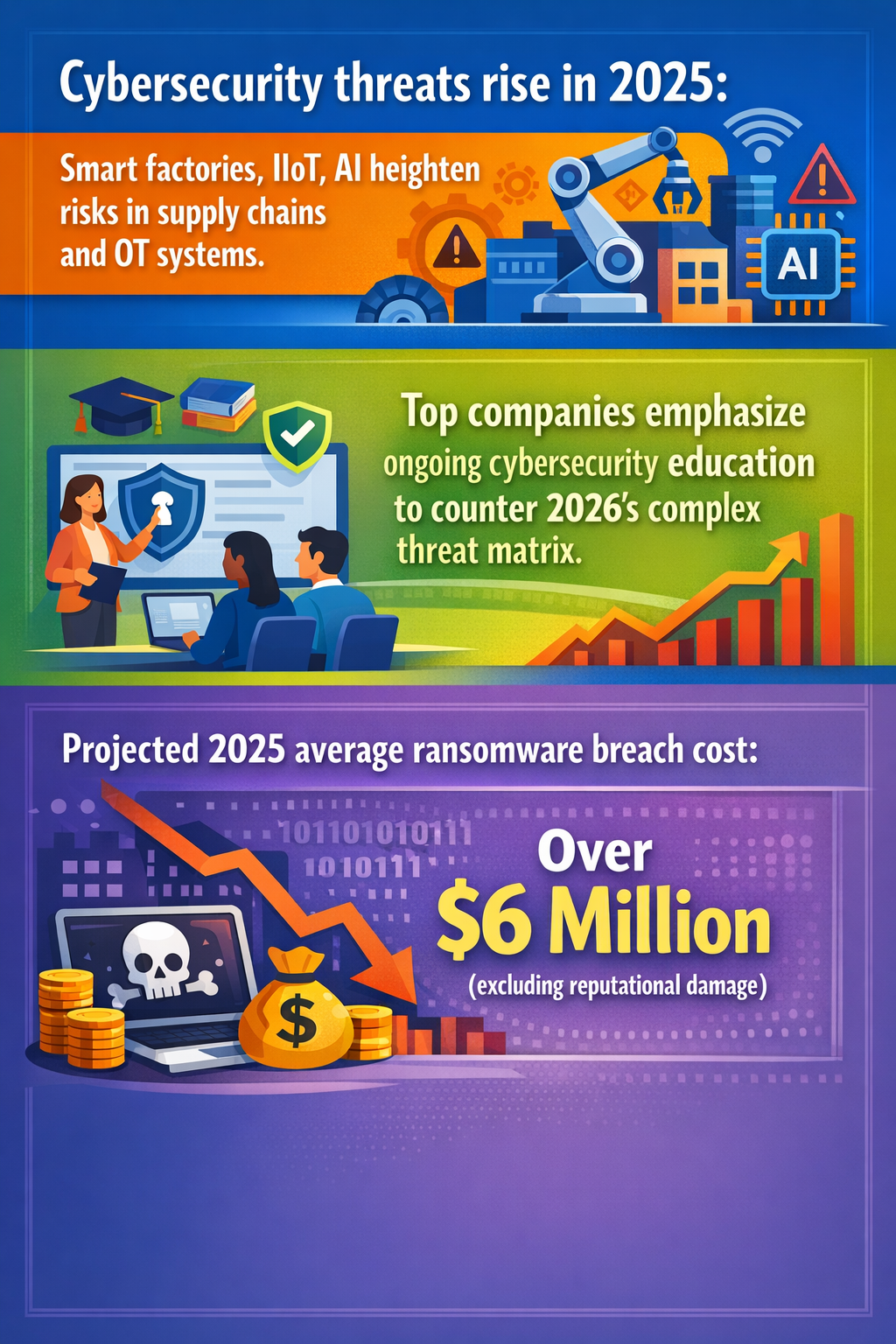
This threat intersects with the broader growth in cybercrime costs, which Cybersecurity Ventures projects to rise 15% annually, reaching $10.5 trillion globally by 2025 and $12 trillion by 2031 (Cybersecurity Ventures). Organizations vulnerable to quantum attacks risk exacerbating these losses, particularly given that the average ransomware breach in 2025 could cost over $6 million (The Business Brilliance).
Concurrently, there is accelerated regulatory momentum. China’s 2025 Cybersecurity Law amendments, for example, aim to strengthen AI ethical standards and risk monitoring, which may indirectly influence preparedness for quantum threats (Linklaters Tech Insights).
Artificial intelligence (AI) itself plays a dual role. On one hand, AI tools like Google DeepMind’s autonomous threat detection systems are advancing defenses (OpenTools AI News). On the other, AI is a force multiplier for attackers and could potentially be leveraged alongside quantum capabilities to amplify cyber threats, raising the complexity of the future threat landscape (Hipther Cybersecurity Roundup).
Moreover, industries that are digitalizing rapidly, such as manufacturing with its smart factories and Industrial Internet of Things (IIoT), face unique exposure because operational technology (OT) systems often lack robust cryptographic protections, creating critical vulnerabilities (Devox Software).
Summarizing these developments, organizations must recognize that quantum threat readiness spans technological, regulatory, and strategic dimensions. It is no longer sufficient to focus solely on classical cyber threats when quantum computing may soon erode fundamental security guarantees.
Why is this Important?
If quantum computers realize capabilities sufficient to crack existing encryption algorithms — such as RSA and ECC (elliptic-curve cryptography) — the confidentiality, integrity, and authenticity of critical data across sectors could be compromised. This includes financial services, healthcare, government communications, manufacturing supply chains, and cloud-based services.
The financial impact would likely be severe. Given ransomware’s current prominence (involved in 44% of breaches in 2025) and its steep remediation costs, the advent of quantum-enabled ransomware could amplify attack success and complicate recovery efforts (DeepStrike 2025 Cybersecurity Threats).
Crucially, the “harvest now, decrypt later” strategy underscores the urgency. Adversaries might already be storing encrypted communications to decrypt retroactively once quantum capabilities mature, threatening sensitive intellectual property and government secrets.
The evolving regulatory landscape will raise compliance demands, and non-compliance could jeopardize market access and partnerships. Enterprises ignoring quantum preparedness risk becoming outliers in a marketplace where strong cybersecurity posture acts as a gatekeeper (Cybersecurity Asia).
The trust paradigm in cybersecurity may shift from device or network-centric models toward identity and cryptography anchored in quantum-safe methods. This transition will affect how organizations design systems, secure supply chains, and govern data across borders and jurisdictions.
Implications
Preparing for quantum-enabled cyber threats demands a multi-layered approach:
- Accelerate Adoption of Quantum-Resistant Cryptography: Organizations should begin integrating post-quantum cryptography (PQC) algorithms standardized by institutions such as the National Institute of Standards and Technology (NIST) into their infrastructure. Early adoption can mitigate the “vulnerable to decrypt later” risk.
- Rethink Risk Assessment Frameworks: Traditional risk models must incorporate quantum threats, emphasizing the temporal dimension of data sensitivity and potential retroactive decryption. Scenario planning should examine the interplay between quantum computing progress and threat actor capabilities.
- Invest in Cybersecurity Awareness and Training: With human error still a leading contributor to breaches, educating employees on quantum impacts and evolving phishing/social engineering tactics remains essential (USCS Institute).
- Enhance Collaboration Across Sectors and Borders: Cyber threats leveraging quantum technology are inherently transnational. Public-private partnerships, international regulatory alignment, and information sharing will improve resilience and early warning capabilities.
- Monitor AI-Quantum Intersections: As AI evolves alongside quantum, organizations must evaluate how autonomous AI-driven defenses can be augmented and how AI-powered attacks could leverage quantum computing.
- Upgrade Legacy Systems and OT Security: Particularly in manufacturing and infrastructure sectors, upgrading operational technology to support quantum-safe solutions will mitigate supply chain and production risks.
Failure to act promptly may create systemic vulnerabilities that adversaries could exploit, affecting economic stability, national security, and individual privacy.
Questions
- How does current cybersecurity strategy incorporate the risk timeline associated with quantum computing advancements?
- What investments are needed now to transition critical systems to quantum-resistant cryptographic standards?
- How can organizations balance the costs of early adoption against uncertain quantum threat onset?
- What frameworks exist or should be developed for international cooperation on quantum cybersecurity regulation and intelligence sharing?
- In what ways can AI be harnessed responsibly to detect and respond to quantum-enabled threats without exacerbating attack sophistication?
- How can industries with legacy operational technology accelerate modernization to reduce quantum-related vulnerabilities?
Keywords
quantum cybersecurity; post-quantum cryptography; quantum-enabled attacks; ransomware; cybersecurity regulation; AI cybersecurity; operational technology security
Bibliography
- The CSL amendments seek to implement stronger guardrails that improve AI ethical standards, strengthen risk monitoring, and utilise AI to enhance cybersecurity protection. Linklaters Tech Insights
- As ransomware and malware continue to evolve and threaten organizations worldwide, the prospect of quantum-enabled attacks intensifies the urgency for developing quantum-resistant security strategies. Rapid7
- Cybersecurity Ventures expects global cybercrime costs to grow by 15% per year over the next two years, reaching $10.5 trillion USD globally in 2025 and $12 trillion USD annually by 2031. Cybersecurity Ventures
- The average cost of a ransomware breach in 2025 is projected to exceed $6 million, not including reputational damage. The Business Brilliance
- Google's DeepMind has unveiled an AI tool designed to autonomously detect and mitigate threats, a move that underscores the growing role of AI in cybersecurity. OpenTools AI News
- Cybersecurity threats in manufacturing have intensified due to the rise of smart factories, IIoT, and AI - with a sharp focus on supply chains and OT systems. Devox Software
- Regulatory frameworks are moving fast, with strong cybersecurity posture and proactive risk controls becoming prerequisites for commercial relationships - not a nice-to-have, but a gatekeeper for participation in the global economy. Cybersecurity Asia