
Emerging Disruption in Global Governance: The Rise of Polycentric Digital Order and Its Implications
As geopolitical tensions rise and economic fragmentation deepens, the architecture of global governance faces transformative pressures. A subtle yet significant change is the increasing movement towards a polycentric digital order—a governance model where multiple power centers, including small states and emerging regional blocs, share authority in managing global digital assets, data flows, and digital sovereignty. This weak signal of a decentralized approach could disrupt traditional global governance dominated by a few major powers, reshaping rules, alliances, and strategic intelligence frameworks critical for businesses, governments, and international institutions alike.
What’s Changing?
Recent developments signal growing challenges to the established digital and geopolitical order. The intensifying rivalry among major powers—the US, China, and Russia—is redefining international relations and complicating efforts for global cooperation (DIPLOMATIST, 2025). In response, smaller states and emerging economies are demanding a more prominent role in digital governance debates, advocating a polycentric approach that diversifies responsibility and authority away from established powers (Global Policy Journal, 2025).
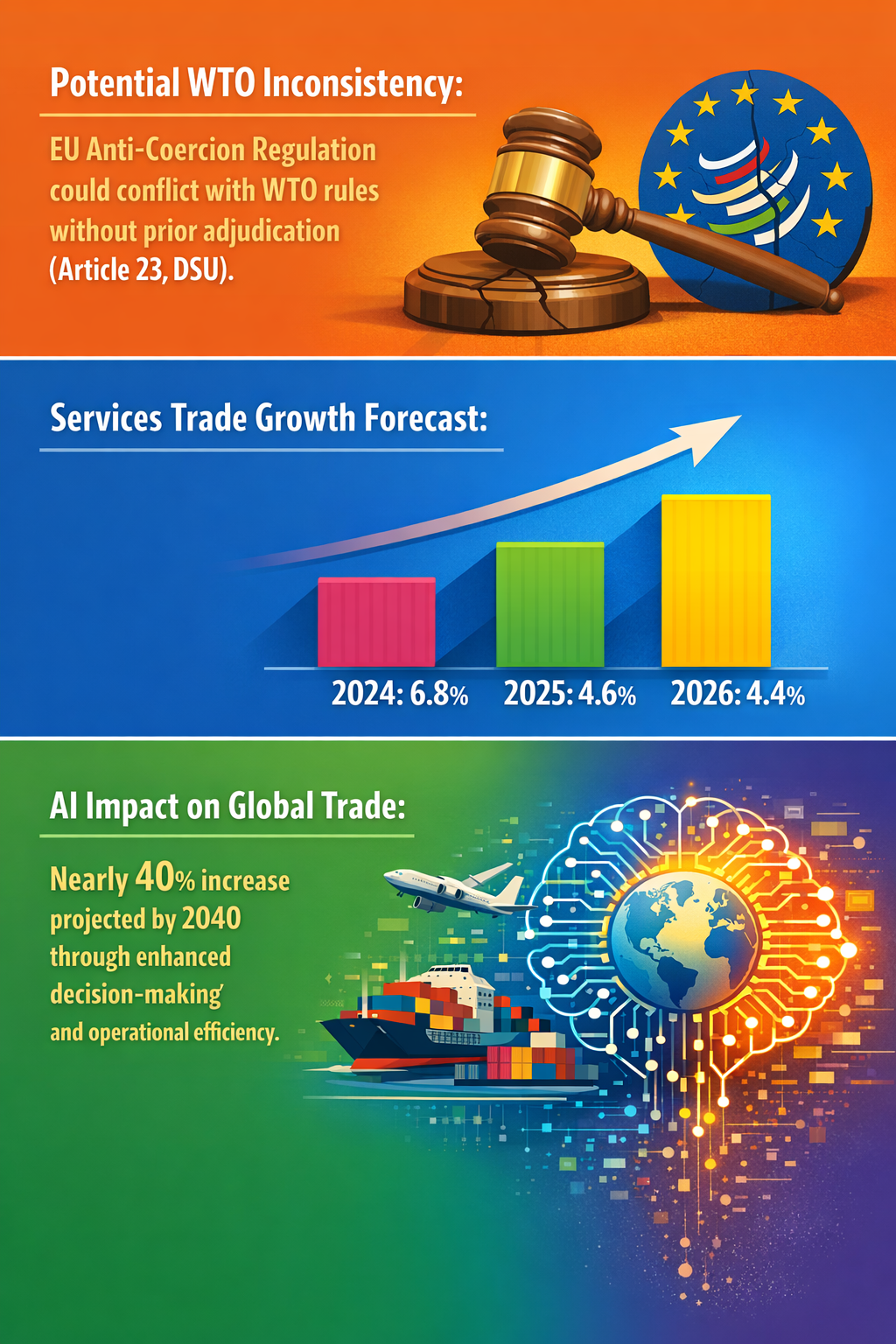
Simultaneously, international institutions like the World Trade Organization (WTO) face mounting difficulties. The WTO’s role in arbitration and trade conflict resolution is challenged by ongoing disputes, such as India’s contested electric vehicle incentives and US tariffs violating WTO norms (Scroll.in, 2025; Sydney University, 2025). This creates a governance vacuum that may accelerate the fragmentation of the digital order into more regionally controlled or polycentric regimes.
Technological innovations also underpin these changes. Emerging governance models propose leveraging blockchain technology for enhanced transparency and artificial intelligence (AI) for conflict mediation in global governance (Ian Khan, 2025). These tools could underpin decentralized governance systems that distribute authority and build trust among a broader array of stakeholders.
Further, strategic alliances are realigning. For instance, Japan is increasingly collaborating with African nations to build more responsible and diversified global governance frameworks (Japan Kantei, 2025). This shift towards multipolarity and regional inputs indicates a movement away from the universalistic governance models epitomized by the United Nations’ global dominance (Asia Times, 2025).
At the same time, China signals a nuanced shift by abandoning its pursuit of special and differential treatment within WTO negotiations, suggesting an alignment with developed-member standards while concurrently promoting new global governance narratives via its Global Governance Initiative (GGI) (The Asia Cable, 2025; IP Quarterly, 2025). The GGI arguably seeks to reframe global digital governance under terms more favorable to China and other emerging economies, further destabilizing traditional governance frameworks.
Why is this Important?
The move towards a polycentric digital order could profoundly affect how governments and businesses operate across borders. Traditional top-down institutions are struggling to reconcile competing interests, resulting in fractured norms and enforcement gaps. This evolution may enhance inclusivity by integrating a broader range of voices, especially smaller states and developing economies, into decision-making processes.
For industries relying on stable and predictable digital infrastructure—such as AI development, international trade in technology products, and supply chain management—these shifts may increase regulatory complexity. Diverse governance frameworks could impose varying data sovereignty requirements, trade barriers, or digital standards, complicating compliance and increasing costs.
Moreover, the growth of blockchain-based transparency and AI-assisted conflict mediation offers tools to overcome governance stalemates. However, they also introduce risks around technological dependency, cybersecurity, and potential manipulation. Governance models adopting these tools will need robust frameworks to ensure legitimacy and equity among participating entities.
From a strategic intelligence perspective, the polycentric digital order will demand more sophisticated horizon scanning and scenario planning. Monitoring multiple centers of power, emerging regional coalitions, and new technology-enabled governance mechanisms requires dynamic analytic capabilities to anticipate disruptions or opportunities.
Implications
This trend towards polycentric governance could lead to several significant outcomes:
- Fragmentation of Global Norms: Instead of a unified global standard, expect regional or issue-based digital standards to proliferate. Businesses may face divergent data privacy laws, trade restrictions, or digital taxation regimes.
- Increased Role of Small and Medium Powers: Smaller states may leverage digital governance forums to gain influence, pushing for more equitable access to digital infrastructure and decision-making power.
- Technological Integration in Governance: Blockchain and AI may become integral to transparency and conflict resolution, potentially raising governance efficiency but also introducing new vulnerabilities.
- Diplomatic and Trade Realignments: Traditional alliances might shift as countries negotiate on new digital terms. Bilateral and plurilateral agreements may replace broader multilateral frameworks.
- Strategic Intelligence Complexity: Organizations will require enhanced capabilities to assess decentralized governance dynamics, anticipate regulatory shifts, and engage with multiple governance centers.
Proactive stakeholder engagement will be vital. Governments, multinational corporations, and civil society organizations should consider participating in emerging polycentric governance platforms to shape rules and minimize risks. Scanning for further technological innovations that could redefine governance—such as decentralized autonomous organizations (DAOs) or next-generation AI applications—could provide competitive advantage.
Questions
- How might existing international organizations adapt to incorporate or compete with polycentric governance models?
- What mechanisms can ensure transparency, accountability, and equity in governance systems that rely on AI and blockchain technologies?
- How will divergent digital sovereignty and data regulation frameworks impact global supply chains, cross-border data flows, and innovation ecosystems?
- What strategies can businesses employ to navigate increasing regulatory complexity while capitalizing on new governance opportunities?
- How will the shifting digital governance landscape influence geopolitical alliances and economic blocs over the next decade?
Keywords
polycentric digital order; digital sovereignty; blockchain governance; AI conflict mediation; global trade fragmentation; small states digital policy; geopolitical shifts
Bibliography
- The world in 2025: Ten issues that will shape the international agenda. DIPLOMATIST, 2025
- Small states, big stakes: Reframing digital sovereignty for many. Global Policy Journal, 2025
- As China goes to WTO over Indian incentives to local electric vehicle sector – what do experts think? Scroll.in, 2025
- Trump’s tariff and trade war: Experts react. Sydney University, 2025
- The future of geopolitical strategy: A 20-50 year outlook. Ian Khan, 2025
- Japan and Africa cooperating to build responsible global governance. Japan Kantei, 2025
- UN’s universalism obsolete in a multipolar world. Asia Times, 2025
- China no longer seeking special treatment in WTO talks. The Asia Cable, 2025
- Beijing showcases its global order pitch. IP Quarterly, 2025