
Emerging Convergence of Cyber Warfare and Unconventional Attacks: A Weak Signal with Industry-Shaping Potential
Complex and multi-vector threats mark the future of global security, blending cyber warfare with unconventional kinetic attacks. An emerging weak signal involves rogue missiles, autonomous drones, and cyber disruption combining to form hybrid assaults that blur traditional battlefield boundaries. This convergence could disrupt industries ranging from defense to energy and shipping, creating unpredictable strategic environments that require novel cross-sector intelligence and resilience planning.
Introduction
The future threat landscape is evolving beyond traditional military conflict into sophisticated hybrid operations that merge cyber attacks with physical, unconventional methods such as rogue missiles or drones. This integration signals a potential new trend of conflict that is diffuse, multi-domain, and increasingly difficult to detect and counter. Beyond nation-states, terrorist networks and proxy actors could exploit this convergence to amplify their impact. This article explores the weak signal of hybrid cyber-kinetic warfare and its implications for strategic intelligence, industries, and decision-makers.
What’s Changing?
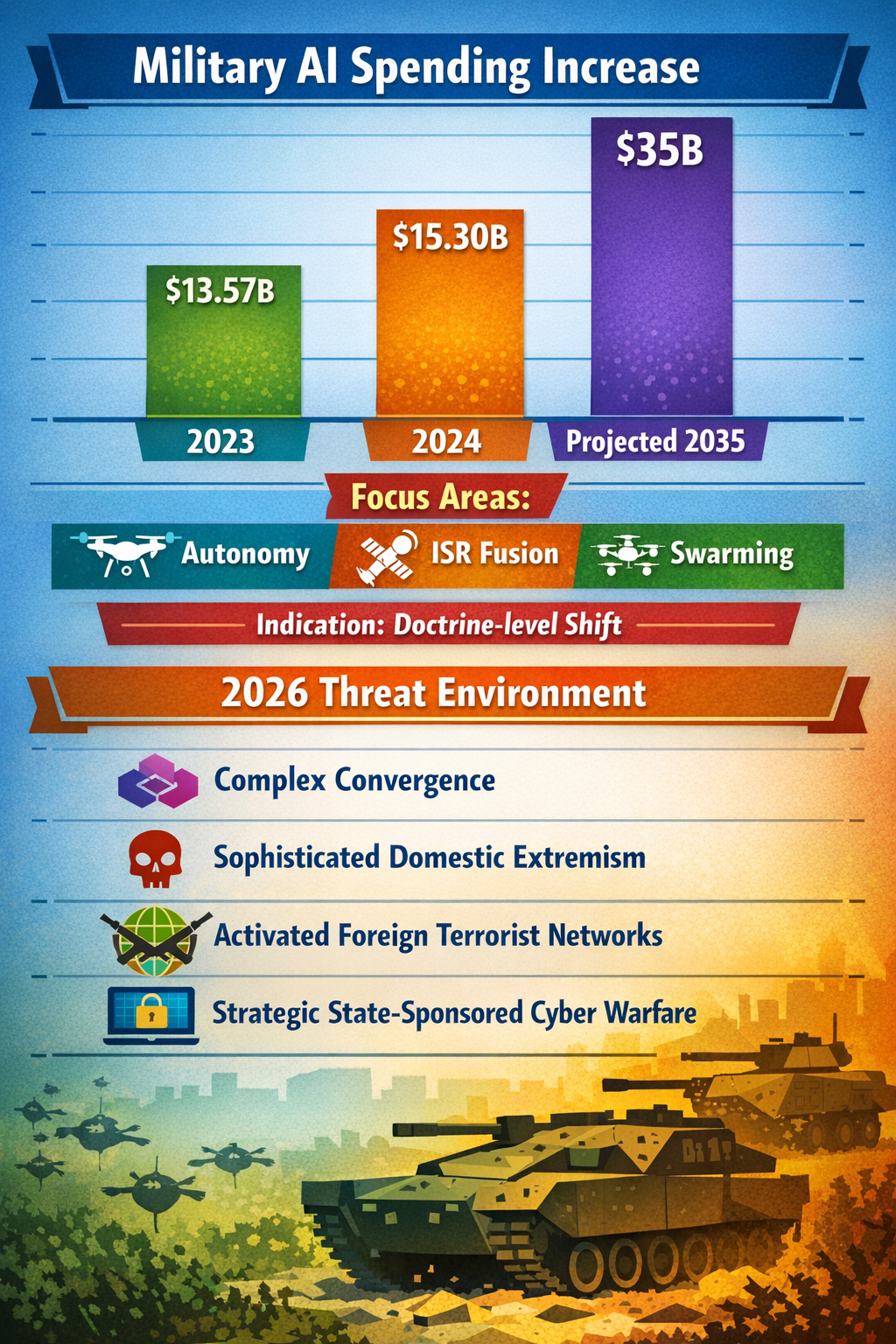
Several recent developments highlight a shift toward integrated cyber and unconventional kinetic threats. The United States faces unprecedented complexity, with domestic extremism and activated foreign terrorist networks operating alongside state-sponsored cyber warfare campaigns (Cyberwarrior76, 2025). Simultaneously, Iran and its allies may leverage cyber capabilities in tandem with conventional attacks, including proxy assaults against critical maritime infrastructure in geopolitically sensitive zones such as the Red Sea and Gulf of Aden (19FortyFive, 2025).
Russia is reportedly prepared to launch unconventional attacks via rogue missiles, autonomous drones, cyber warfare, or severing undersea internet and energy pipelines (The Sun, 2025). This reveals a shift from traditional, centralized warfare into multi-nodal attacks that target not only military assets but also critical infrastructure, using digital and physical means in concert.
Cybersecurity firms specializing in threat detection and response, such as CrowdStrike and Palo Alto Networks, could see surging demand as these hybrid threats expose vulnerabilities across sectors (Market Minute, 2025). The growing integration of AI in tracking nuclear assets and upgrading offensive cyber capabilities further complicates the strategic environment by accelerating information processing and response times (The Dispatch, 2025).
This convergence of cyber and kinetic methods creates a potent mixed-threat environment capable of amplifying disruption through simultaneous, multi-domain attacks targeting government, commercial, and civilian assets. Traditionally siloed industries such as maritime shipping, energy supply chains, and telecommunications increasingly find themselves facing unseen vulnerabilities emerging from the hybridization of threat vectors.
Why is This Important?
The combination of cyber warfare, drone technology, and physical sabotage presents a paradigm shift in security threat profiles by making attacks more unpredictable and scalable. Industries critical to global commerce and national security—such as energy, shipping, and telecommunications—could face unprecedented cascading failures from a single coordinated assault. This hybrid threat environment disrupts classical risk models by intertwining digital and physical disruption vectors.
This emerging trend challenges governments and businesses to rethink traditional defense and resilience strategies. Specifically:
- Cyber defenses alone may no longer suffice as attackers blend digital breaches with physical strikes on infrastructure.
- Supply chain security must integrate cyber-physical vulnerability assessments to detect and mitigate potential hybrid attack paths.
- Intelligence communities may need to fuse signals from cyber threat monitoring with satellite and drone surveillance for early warning of combinatorial attacks.
The increasing difficulty in attributing hybrid attacks complicates diplomatic and military responses, potentially eroding deterrence frameworks rooted in clear lines of accountability. For example, proxy actors empowered by state cyber capabilities could escalate regional conflicts while maintaining plausible deniability for their sponsors.
Implications
This weak signal foreshadows intense disruption ahead across multiple sectors and domains:
- Defense and National Security: Agencies must prioritize investments in integrated multi-domain threat detection, combining cyber intelligence with kinetic threat surveillance. Developing rapid-response frameworks to hybrid incidents may become essential.
- Energy and Infrastructure: Critical utilities, including underwater energy pipelines and internet cables, face vulnerabilities to disruptive hybrid attacks that could lead to prolonged outages or cascading failures affecting civilian populations and economies.
- Maritime and Shipping: Sea lanes in conflict-prone regions may be increasingly targeted by drone swarms and cyber sabotage, necessitating enhanced protection protocols and international cooperation for maritime cybersecurity and physical defense.
- Cybersecurity Industry: A surge in demand for firms with capabilities at the intersection of cyber defense, AI anomaly detection, and physical security can be expected. New service models blending cyber-physical risk assessment could emerge.
- Technology and AI: AI’s expanding role in analyzing intelligence and enabling faster cyber warfare operations could create an arms race involving autonomous decision-making systems, raising ethical and strategic challenges.
Organizations need to update risk models to incorporate the interplay between cyber and physical threats. Scenario planning exercises should simulate multi-vector attacks to explore response effectiveness and identify cross-sector interdependencies.
Cross-industry collaboration between cybersecurity experts, defense planners, and infrastructure operators will be critical to building robust, layered defenses. Governments are likely to impose more stringent regulations requiring transparency and rapid incident reporting for hybrid security incidents.
Questions
- How can organizations integrate cyber and physical security monitoring to timely detect hybrid attacks?
- What new policies should governments enact to regulate dual-use technologies like drones and AI in conflict zones?
- In what ways can private sector and defense industry partnerships be structured to share intelligence on emerging hybrid threats without compromising proprietary information?
- How might attribution challenges in hybrid attacks impact deterrence strategies and international conflict resolution?
- What risk-assessment methodologies can capture the cascading effects of combined cyber and kinetic attacks across critical infrastructure?
Keywords
hybrid warfare; cyber warfare; unconventional weapons; drone attacks; critical infrastructure security; cyber-physical security; AI in warfare; multi-domain threat detection
Bibliography
- The United States enters 2026 facing a threat environment of unprecedented complexity, characterized by the convergence of sophisticated domestic extremism, activated foreign terrorist networks, and strategic state-sponsored cyber warfare. Cyberwarrior76. https://cyberwarrior76.substack.com/p/vectr-cast14-day-terrorism-threat
- There could be cyber warfare from Tehran, a terrorist attack against the United States, or the Iranians could convince their allies, like the Yemeni Houthis, to resume attacks against civilian and military shipping in the Red Sea or the Gulf of Aden. 19FortyFive. https://www.19fortyfive.com/2025/12/world-war-iii-could-happen-5-places-america-could-go-to-war-in-2026/
- Russia are able to launch an unconventional attack which could happen through the use of a rogue missile or rogue drones, cyber warfare or cutting internet pipes or energy pipelines under the sea. The Sun. https://www.the-sun.com/news/15584703/putin-ready-ww3-europe-tyrant-launch-attack/
- Cybersecurity Firms: In an era where cyber warfare is a growing threat, companies specializing in cybersecurity solutions, such as Palo Alto Networks or CrowdStrike, would likely experience a surge in demand. Market Minute. https://markets.financialcontent.com/stocks/article/marketminute-2025-12-11-the-ever-present-shadow-how-geopolitical-tensions-could-reshape-markets-in-late-2025
- AI could potentially make tracking other states’ nuclear weapons easier by analyzing massive amounts of data and upgrading cyber-warfare capabilities. The Dispatch. https://thedispatch.com/newsletter/morning/saber-rattling-raises-fears-of-a-new-nuclear-era/