
The Emerging Role of Integrated Smart Cities and Sustainable Urban Systems in Asia-Pacific
The Asia-Pacific region is rapidly advancing towards a future where smart city technologies intersect with sustainability imperatives like biofuel adoption and waste management. A weak but emerging signal lies in how these developments, driven by rising urbanization and technology diffusion, might evolve into integrated urban ecosystems that disrupt traditional industry boundaries. This could transform how cities function, how energy is consumed, and how citizens engage with infrastructure over the next two decades.
What’s Changing?
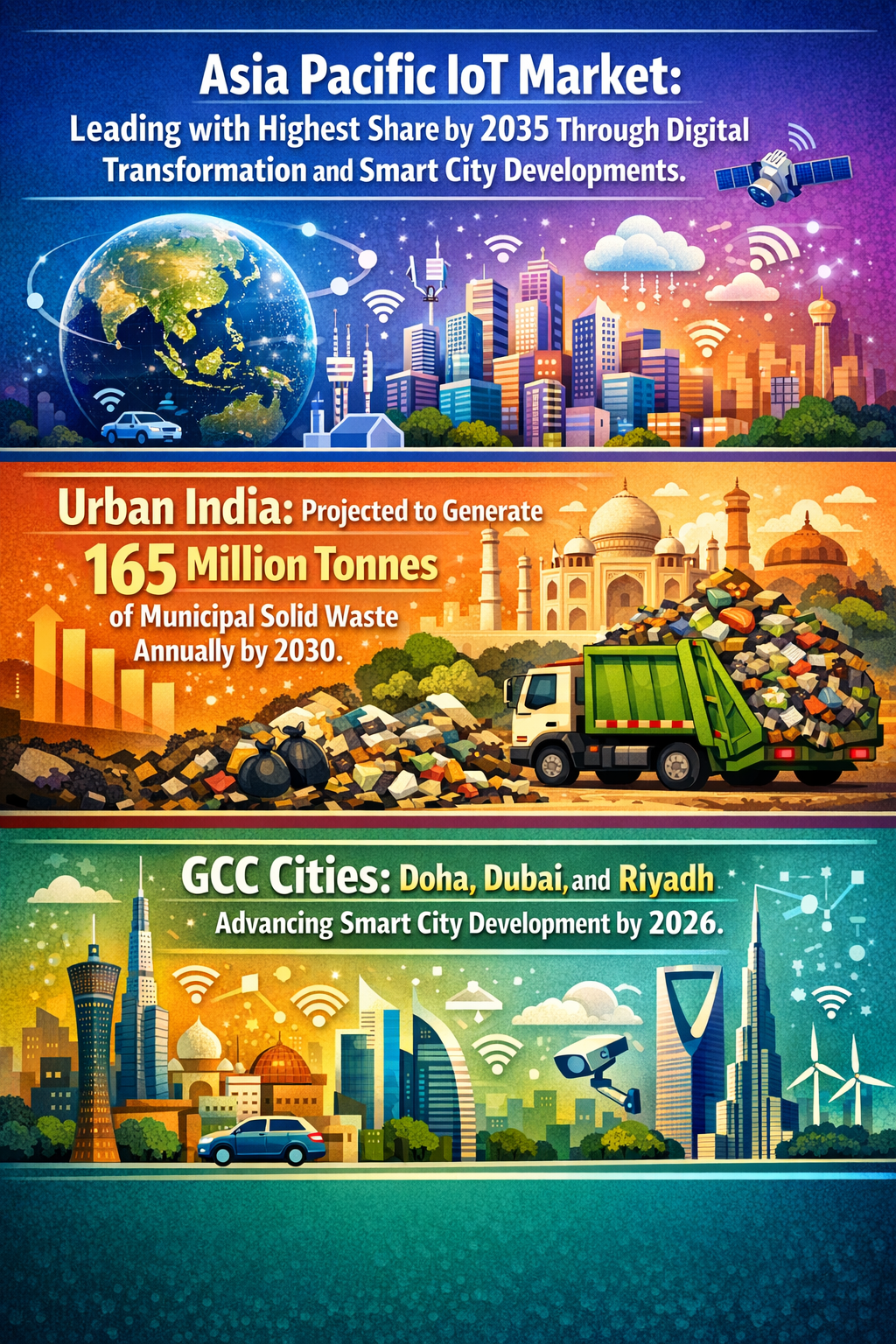
The Asia-Pacific region is projected to grow at the fastest compound annual growth rate (CAGR) for sustainable fuels from 2026 to 2035, driven by rapid industrialization and urban expansion alongside a shifting energy matrix favoring biofuels (GlobeNewswire).
Simultaneously, pioneering smart city initiatives such as Singapore's Master Plan reveal a bold vision for urban innovation that integrates advanced technologies with citizen engagement (JIS Telecom and Briz). Singapore’s continued evolution in urban living illustrates the increasing complexity and interconnectedness of smart city ecosystems.
Meanwhile, other urban centers across the Asia-Pacific, including GCC cities like Doha, Dubai, and Riyadh, are aggressively pursuing smart city development with a green tourism focus (Travel and Tour World).
Adding complexity is the alarming rise in health risk factors in these urbanizing regions. For example, in India, prevalence of hypertension has doubled, fueled by lifestyle changes from urbanization, potentially pressuring urban healthcare infrastructure (Market Data Forecast).
Waste generation is also surging, with urban India alone projected to produce 165 million tonnes of municipal solid waste annually by 2030 (Insights on India), highlighting the growing need for sustainable urban waste management technologies and policies.
South Korea’s urbanization trajectory includes increased penetration of smartphones and connected electric vehicles, portending greater adoption of Internet of Things (IoT) ecosystems that integrate mobility with urban services (SkyQuest).
These individual trends suggest an underlying weak signal: a convergence of urbanization, emerging sustainable energy use, digital connectivity, public health challenges, and environmental pressures. Their intersection points toward the potential rise of integrated, sustainable smart city ecosystems that could redefine urban living and disrupt multiple industries—from energy production and waste management to healthcare and mobility services.
Why is this Important?
The integration of smart city technologies with sustainability efforts in Asia-Pacific could disrupt traditional utility and infrastructure sectors by shifting demand and delivery models. For example, biofuel adoption at scale may challenge fossil fuel dominance in urban transportation and power generation.
Such integration could foster new markets for urban data-driven solutions, with citizen-centric smart city platforms allowing for proactive public health interventions and more efficient resource use. This may alleviate growing urban health risks linked to lifestyle changes amid rapid city growth.
Municipal solid waste management could transition from a cost centre to an opportunity through technologies linking IoT-enabled collection with biofuel generation or recycling innovations. This potentially creates circular economy hubs within urban zones, impacting waste, energy, and manufacturing sectors simultaneously.
Regional differences, such as the GCC’s green tourism emphasis or South Korea’s connected vehicle ecosystem, indicate the possibility of diverse but compatible models of smart sustainable urban development emerging. These models could generate transferable insights and technologies with global applicability.
Implications
Industries must anticipate that the future urban landscape will be shaped not by isolated technological advances but by the integration of multiple systemic changes at once. This requires broadening horizon scanning to account for cross-sectoral disruptions and opportunities.
Energy companies should monitor biofuel market trajectories closely, especially in relation to urban energy demands and smart city deployments that could either accelerate or decelerate adoption depending on infrastructure compatibility and policy support.
Urban planners and governments need to consider how to design regulatory frameworks that foster interoperability among digital platforms, health systems, and environmental services to maximize citizen benefits and system resilience.
Healthcare providers may face new challenges and opportunities from data-driven population health management enabled by smart city sensors and analytics, necessitating investments in digital health infrastructure and collaborations beyond traditional healthcare sectors.
Waste management operators would benefit from exploring partnerships with energy producers and technology firms to convert rising waste volumes into valuable resources within integrated urban systems, potentially tapping into renewable energy incentives and circular economy policies.
Questions
- How can urban infrastructure investments best be aligned to encourage cross-sectoral integration rather than siloed smart city or sustainability projects?
- What policy frameworks would accelerate biofuel adoption in ways that complement smart city energy and mobility systems?
- How might urban health risks linked to lifestyle changes be mitigated through real-time data and citizen engagement platforms?
- In what ways can waste-to-energy and circular economy models be scaled in urban settings without generating new environmental or social risks?
- Which industries stand to be most disrupted by the convergence of these trends, and what strategic partnerships should be explored now?
Keywords
Smart Cities; Sustainable Fuel; Urbanization; Biofuels; Waste Management; Public Health; Internet of Things; Circular Economy
Bibliography
- Asia-Pacific is expected to grow at the fastest CAGR from 2026 to 2035 due to rapid industrialization, urbanization, and increasing biofuel adoption. GlobeNewswire. https://www.globenewswire.com/news-release/2026/01/06/3213782/0/en/Sustainable-Fuel-Market-Volume-to-Worth-3-80-Million-Tons-by-2035.html
- The Singapore Smart City Master Plan is a bold and ambitious initiative that has the potential to transform Singapore into a global leader in urban innovation. JIS Telecom. https://testelecom.jis.az/blog/singapores-smart-city-master-plan-a-detailed-overview-1767648504
- With a strong commitment to innovation and a focus on citizen engagement, Singapore's smart city initiatives will continue to evolve, shaping the future of urban living. Briz. https://kibana.briz.ua/blog/singapore-the-smart-city-evolution-1767648301
- In 2026, GCC cities like Doha, Dubai, and Riyadh will continue their push towards smart city development. Travel and Tour World. https://www.travelandtourworld.com/news/article/saudi-arabia-unites-oman-qatar-uae-kuwait-and-bahrain-in-introducing-green-tourism-initiatives-in-2026-what-do-you-need-to-know/
- Urbanization and lifestyle changes have led to a sharp increase in cardiovascular risk factors; in India, hypertension prevalence has nearly doubled in the past two decades. Market Data Forecast. https://www.marketdataforecast.com/market-reports/blood-pressure-monitoring-device-market
- Rising waste generation: Urban India is projected to generate 165 million tonnes of municipal solid waste annually by 2030, reflecting rapid urbanization. Insights on India. https://www.insightsonindia.com/2026/01/03/upsc-current-affairs-3-january-2026/
- South Korea presents opportunities based on the pace of urbanization, increased penetration of smartphones, and increased usage of connected and electric vehicles. SkyQuest. https://www.skyquestt.com/report/vehicle-security-market