
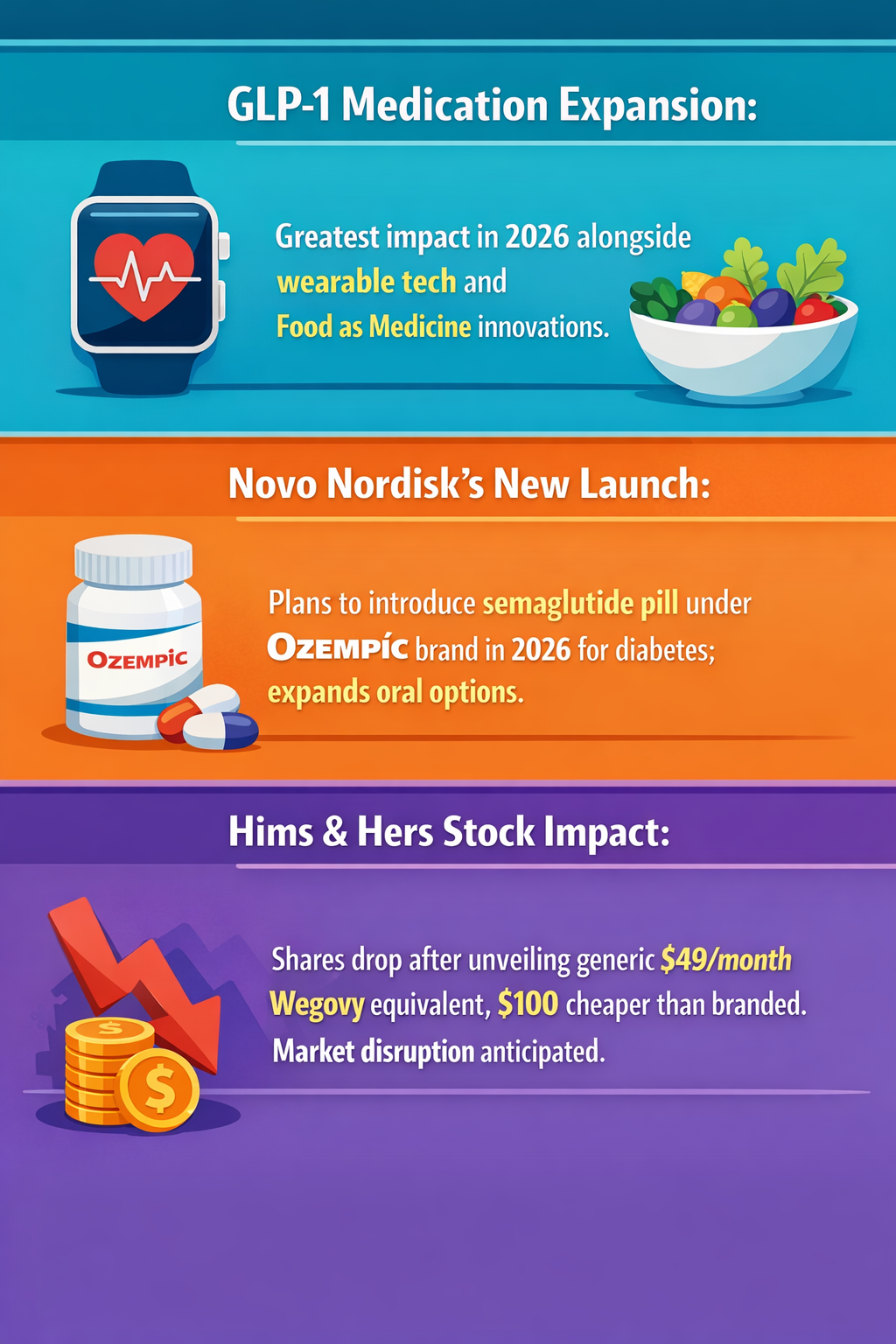
The Emerging Industrial Impact of GLP-1 Weight-Loss Drugs: A Weak Signal with Disruptive Potential
Weight-loss drugs based on glucagon-like peptide-1 (GLP-1) analogues are rapidly shifting from niche pharmaceutical products to mainstream health interventions, driven by new manufacturing capabilities and regulatory scrutiny. While GLP-1 therapies are widely recognised for their efficacy in treating obesity and related conditions, a weak signal of disruption lies in the regulatory challenges around unapproved versions and the large-scale industrial buildout for approved drug production. This development may reshape pharmaceutical manufacturing, supply chains, healthcare delivery, and even labour markets.
What’s Changing?
The U.S. Food and Drug Administration (FDA) recently issued warnings regarding risks tied to unapproved GLP-1 ingredients and compounded versions of these drugs that have not undergone regulatory approval (Access Newswire). This signals a growing recognition of potential public health dangers as demand rises and unregulated products enter the market. Compounded drugs are custom-made formulations often produced outside large-scale pharmaceutical plants, raising concerns about quality control and safety in the rapidly expanding weight-loss drug market.
Simultaneously, major pharmaceutical companies are investing billions in expanding capacity to meet anticipated demand. For example, Eli Lilly recently announced a $3.5 billion investment in a weight-loss drug manufacturing plant in Pennsylvania’s Lehigh Valley, which is expected to create 850 permanent jobs (Ermer Suter). This expansion is not merely a scale-up; it reflects an industrial strategy to industrialize the production of GLP-1 analogues, transitioning from relatively low-volume specialty drugs to mass-market therapeutics.
These two parallel developments—a regulatory crackdown on unapproved GLP-1 formulations and expansive industrial investment in approved drugs—point to a transformative shift in the pharmaceutical sector. The GLP-1 weight-loss market is evolving from fragmented, often unregulated supply to consolidated, large-scale production, supported by robust regulatory frameworks. This trend is emerging quietly but has the characteristics of a disruptive force across multiple sectors beyond healthcare alone.
Why Is This Important?
The confluence of regulatory scrutiny and industrial expansion portends significant changes in healthcare accessibility, industrial employment, and supply chain architecture. Enforcement against unapproved GLP-1 products may reduce potentially hazardous options on the market, driving demand toward approved, regulated drugs. This could increase the cost and reshape the pricing dynamics of weight-loss medications.
On the industrial side, the entry of billion-dollar manufacturing plants specifically dedicated to GLP-1 weight-loss drugs indicates that these therapies could become staple products in pharmaceutical portfolios, akin to statins or insulin analogues. The creation of hundreds of manufacturing jobs in regions like Lehigh Valley introduces new socio-economic dynamics, potentially revitalizing industrial zones that have lost manufacturing activity.
The trend also suggests a redefinition of pharmaceutical supply chains with implications for raw material sourcing, logistics, and regulatory compliance. Existing supply networks may experience strain or reorganization as demand accelerates for specific APIs (active pharmaceutical ingredients) associated with GLP-1 drugs. Moreover, the clinical emphasis on obesity management through pharmacology rather than lifestyle interventions may shift healthcare models, possibly impacting insurance, clinical practice, and public health strategies.
Implications
Long-term, the industrialization of GLP-1 drug manufacturing could:
- Drive pharmaceutical innovation not only in weight-loss therapies but also in related metabolic and endocrine treatments, amplifying research and development efforts.
- Reshape employment landscapes by creating skilled manufacturing roles while potentially reducing demand for smaller-scale compounding pharmacy work, reshaping labour market geographies.
- Trigger regulatory evolution—as demand for GLP-1 therapies grows, regulatory agencies might refine frameworks for compounded drugs, accelerate approvals for novel analogues, and increase post-market surveillance.
- Influence healthcare economics by altering cost structures, reimbursement policies, and patient access to pharmacological weight-loss options versus traditional interventions.
- Impact global supply chains since active ingredients and manufacturing inputs may be concentrated geographically, potentially increasing vulnerabilities to disruption in a highly centralized model.
Organizations in pharmaceutical manufacturing, healthcare delivery, regulatory bodies, and regional economic planners would likely need to monitor and adapt to these shifts proactively. Investments in workforce training, quality assurance, and supply chain resilience may become priorities to leverage opportunities and mitigate risks from this emerging trend.
Questions
- How might regulatory agencies balance rapid market growth of GLP-1 drugs with ensuring patient safety and quality control?
- Will the focus on pharmacological weight management reduce investments in preventive healthcare and lifestyle programs?
- How can regional economies best capitalize on the job creation potential of new pharmaceutical manufacturing plants?
- What risks do highly centralized GLP-1 drug supply chains pose to global healthcare systems, and how might these be mitigated?
- Could the expanding GLP-1 market catalyse innovations in related metabolic disease treatment, and what industries might intersect with this growth?
Keywords
GLP-1 weight-loss drugs; pharmaceutical manufacturing; regulatory compliance; supply chain disruption; healthcare innovation; metabolic therapy; industrial job creation
Bibliography
- Futurhealth Weight Loss in 2026 is the Full GLP-1 Program with Nutrit. Access Newswire. https://www.accessnewswire.com/newsroom/en/healthcare-and-pharmaceutical/futurhealth-weight-loss-in-2026-is-the-full-glp-1-program-with-nutrit-1136598
- Eli Lilly plans to open a $3.5 billion weight-loss drug manufacturing plant in Pennsylvania’s Lehigh Valley, creating 850 permanent jobs. Ermer Suter. https://www.ermersuter.com/category/generative-ai/