
The Unseen Wildcard: DIY Bio and AI Democratization as Catalysts for Nonstate Biotechnological Threats
Synthetic biology and biotechnology wield transformative potential for health, agriculture, and industry. However, a critical but underappreciated wildcard is emerging—the convergence of democratized biotechnology tools with artificial intelligence (AI), particularly within the Do-It-Yourself biology (DIY bio) community and decentralized innovation networks. While much discourse focuses on technological progress, product pipelines, and regulatory acceptance, the subtle risk of nonstate actors accessing sophisticated gene-editing and synthetic biology capabilities outside institutional controls has scarcely penetrated mainstream strategic intelligence. This paper foregrounds this weakly recognized but plausible development and analyzes how it might catalyze structural shifts in regulation, industrial security, and capital allocation over the next 5 to 20 years.
Signal Identification
This dynamic constitutes a wildcard: an infrequent, disruptive, and high-impact development difficult to predict but with significant consequences if it materializes. It qualifies as a wildcard due to (a) the emergent synthesis of cheap, accessible synthetic biology tools empowered by AI-based design and automation platforms, and (b) the proliferation of decentralized biohacker communities enabled by open science and online knowledge flows. This convergence blurs traditional institutional boundaries around biosafety and biosecurity currently managed by governments and regulated industries.
The plausible time horizon for impactful disruptions linked to this convergence is 5–10 years, given accelerating AI integration and the rapidly expanding global DIY bio movement. The plausibility band is judged as medium: substantial technical and social barriers remain, but progress is fast and regulatory frameworks lag. Sectors particularly exposed include biodefense, pharmaceuticals, agriculture, and regulatory governance.
What Is Changing
Several sources underscore accelerating accessibility and capability expansion in biotechnology tools, but few explicitly emphasize the compounded risk from AI-driven automation coupled with decentralized experimentation. The article from Global Biodefense (02/11/2025) highlights an emerging concern: nonstate actors could exploit advanced synthetic biology and gene-editing tools—once the exclusive domain of well-funded institutions—to develop biological weapons. This is not speculative fiction; improvements in platform technologies, modular gene synthesis, and AI-driven design lower barriers to entry rapidly.
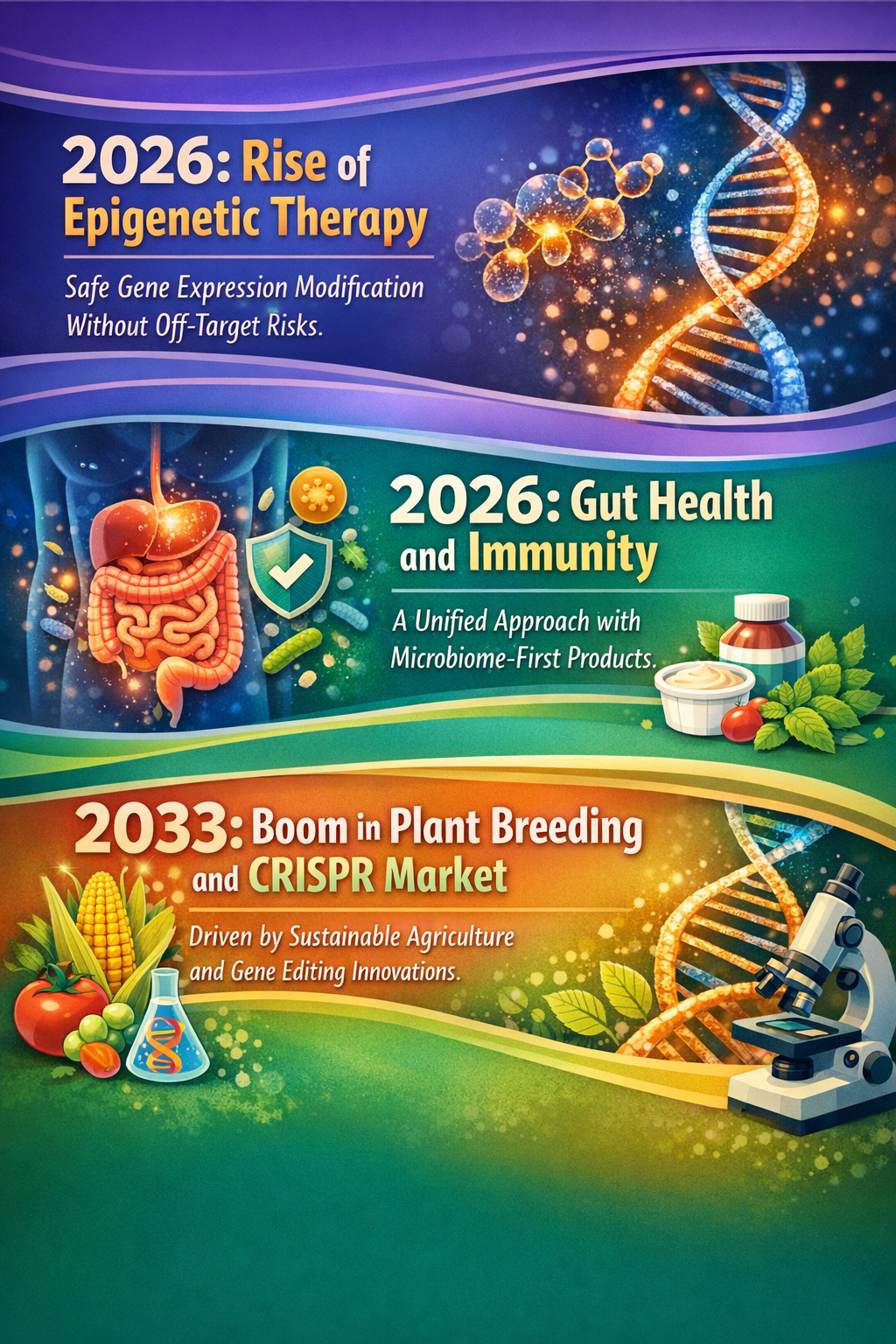
Parallel developments in agricultural CRISPR applications reported by OpenPR (Date unknown) and Indian national initiatives (NovaOneAdvisor) reveal a global diffusion of powerful genetic tools, legally sanctioned and commercially proliferating, which also inform DIY communities. The democratization of biotechnology is spurred not only by instrumentation costs falling but also by the explosion of AI computational biology platforms enabling nonexpert design and simulation of genetic circuits and organisms.
Meanwhile, healthcare and industrial biotech sectors prioritize rapid commercialization, evidenced by increased CRISPR integration in crops (OpenPR), and India's push for indigenous CRISPR-driven healthcare solutions (Chemistry World 05/2024). While these developments signify growth and legitimacy in biotechnology, they also expand the knowledge base accessible outside traditional regulatory and commercial channels.
Crucially, the conventional frameworks of biosafety, intellectual property control, and security are poorly designed for a landscape where synthetic biology can be practiced in community labs with AI assistance. This represents a structurally different challenge than past decades, where risk was bounded by institutional access barriers.
Disruption Pathway
The pathway by which this wildcard could prompt structural change begins with the steady erosion of biological R&D exclusivity by advances in AI-powered bioinformatics, automated DNA assembly machines, and open-access protocols in decentralized biohacker groups. As these tools proliferate globally, the entry threshold for advanced synthetic biology lowers dramatically. This democratization accelerates further as cloud-based AI platforms reduce the expertise needed to design complex biological systems, including pathogens or modified organisms with dual-use potential.
These conditions could trigger regulatory and industrial stresses by exposing gaps in national and international biosecurity frameworks, which currently rely on institutional inspections, export controls, and conventional IP regimes. Nonstate actors or malicious entities might exploit these holes, increasing the frequency or severity of unnoticed dangerous bioengineering attempts. This would push governments to reconsider the legal and operational scope of biological research oversight beyond licensed labs to include DIY spaces and digital design repositories.
In response, regulatory adaptation may bifurcate into two tendencies. One, increased surveillance and controls over synthetic biology hardware, software, and biological materials, potentially fragmenting open science and innovation ecosystems. Two, expanded investments in bio-surveillance, threat detection technologies, and resilient supply chains that can withstand biological disruption. These shifts could force established biotech companies and governments to reallocate capital toward security and governance innovations rather than purely product development, altering traditional industrial structures and partnerships.
Strategic positioning will gravitate toward entities that can integrate biosecurity intelligence, AI-driven risk modeling, and rapid response capabilities, potentially favoring cross-sector alliances between defense, biotech, and AI firms. Governments may usher in new regulatory frameworks emphasizing accountability for software algorithms used in bio-design, as well as stricter controls on synthetic DNA manufacturing and distribution.
Why This Matters
This wildcard has direct implications for capital allocation by shifting investment priorities toward biosecurity technologies, AI governance in biotechnology, and resilient bioindustrial infrastructures. Firms and governments that ignore or underestimate the DIY bio + AI convergence risk unanticipated liabilities arising from biothreats sourced outside centralized institutions.
From a regulatory perspective, this development challenges long-standing models based on certifying facilities and professionals. Instead, regulators will face pressure to innovate frameworks encompassing decentralized, digitally enabled bio-innovation. This could lead to novel licensing schemes, oversight mechanisms for AI-driven design platforms, and international biosecurity cooperation agreements that balance innovation with risk mitigation.
In competitive positioning, incumbents may need to defend intellectual property and market share while adapting to a landscape where replication and modification occur beyond their control. Conversely, start-ups that specialize in biosecurity analytics and AI-powered risk assessment might gain strategic advantage.
Supply chain governance will likely evolve, as pharmaceutical and agricultural biotech products sourced via gene-edited organisms demand provenance verification in an environment where synthetic biology outputs could be produced in uncontrolled settings. This introduces new dimensions of traceability and liability, necessitating robust biotraceability standards.
Implications
This signal may drive a paradigm shift in how biotechnology innovation is governed and securitized rather than merely expanded. It might compel stakeholders to integrate AI ethics, cybersecurity, and biosafety considerations into a cohesive framework for synthetic biology. The signal should not be conflated with exaggerated fears of widespread bioterrorism enabled overnight; substantial technical hurdles and social contingencies remain. However, ignoring the risk might leave systems unprepared for increasingly sophisticated decentralized bioengineering attempts.
Alternate interpretations might frame this development as an opportunity to democratize innovation globally, catalyzing breakthroughs in neglected areas through open science. While this is valid, it does not obviate the need for evolved governance and risk management paradigms that keep pace.
Early Indicators to Monitor
- Patent filings and venture capital clustering in AI-driven synthetic biology design platforms with decentralized collaboration features.
- Emergence of open-access databases that facilitate design and sharing of synthetic gene circuits and organisms.
- Procurement and regulatory drafts aiming to define and control synthetic DNA orders and gene-editing kits outside institutional labs.
- Reporting of DIY bio community projects incorporating AI automation and scale-up hardware.
- Formation of cross-sector alliances targeting biosecurity within AI and biotech industries.
- International diplomatic negotiations or treaties addressing synthetic biology dual-use risk in the context of AI-enabled design.
Disconfirming Signals
- Significant technical setbacks or resource constraints in AI integration with synthetic biology reducing capability expansion.
- Robust, rapid regulatory reforms effectively encompassing DIY bio communities and design platforms, preventing decentralized proliferation.
- Widespread social or ethical pushback leading to self-imposed moratoriums within DIY bio movements.
- Absence of any notable malicious biological incidents or credible threats emerging from decentralized bioengineering efforts over an extended period.
- Technological lock-in favoring centralized institutional pipelines due to cost or safety efficiencies.
Strategic Questions
- How can regulatory frameworks evolve to encompass decentralized and AI-augmented synthetic biology without stifling innovation?
- What capital allocation shifts should be anticipated to balance growth and biosecurity investments in biotechnology?
- How might industrial leaders partner with governments to develop resilient bioindustrial supply chains and threat detection systems?
- What governance models could integrate AI transparency and accountability into gene-editing and synthetic biology design tools?
- How can emerging economies leverage the democratization of biotech tools while managing associated biosafety risks?
- What indicators should be monitored to detect early signals of nonstate actor exploitation of AI-driven synthetic biology?
Keywords
Synthetic Biology; CRISPR; DIY Biology; Artificial Intelligence; Biodefense; Biosecurity; Gene Editing; Regulation; Governance; Supply Chain.
Bibliography
- Global Biodefense 02/11/2025
- OpenPR (Date unknown)
- NovaOneAdvisor (Date unknown)
- Chemistry World (2024)