
The Quiet Vertical: Unrecognised Implications of Multi-layered Urbanization for Megacity Futures
As urbanization surges globally, particularly in Asia Pacific and the Global South, a critical but underappreciated dimension is the rapid expansion into vertical urban layers. Beyond horizontal sprawl and population swelling, this vertical densification constitutes a nascent structural inflection with profound regulatory, capital, and industrial consequences extending 5 to 20 years forward.
Emerging urban growth in megacities is often framed through surface-level metrics: population growth, infrastructure demand, and economic expansion. However, new data underscore that the vertical dimension—multi-level urban stacking of residential, commercial, social, and ecological functions—poses unique scaling challenges and opportunities rarely acknowledged. Ignoring this could misguide strategic investments, regulatory frameworks, and city governance models, especially across Asia Pacific’s fastest-growing urban corridors.
Signal Identification
This development qualifies as an emerging inflection indicator due to its latent but accelerating impact on urban morphology and systemic function. Unlike conventional urban metrics focusing on horizontal area expansion or mere population counts, vertical layering reshapes urban connectivity, land use, and service delivery. Recognized by urbanists but not broadly integrated into strategic foresight or capital planning, this trend is poised to manifest structural implications within a 5–20 year horizon, with a medium to high plausibility band.
Sectors exposed include urban infrastructure, real estate, transport, regulatory governance, environmental management, and construction technology. The vertical dimension’s integration could also disrupt industrial clusters linked to logistics, utilities, and health services embedded within megacity ecosystems.
What Is Changing
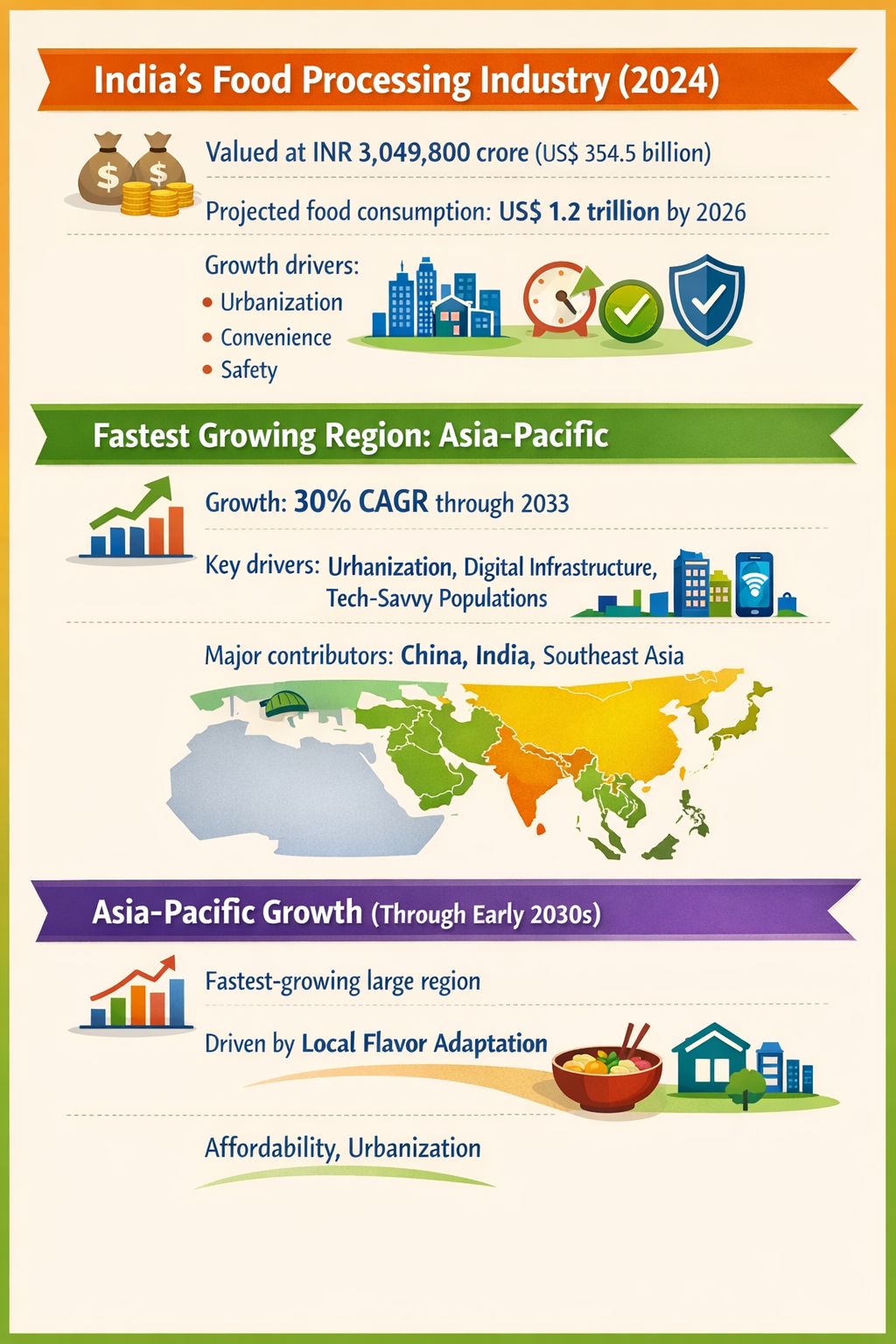
Asia Pacific’s urbanization, already the fastest growing region globally, is distinguished by accelerated middle-class expansion and government-led health initiatives driving urban form (Persistence Market Research 21/04/2026). The contribution of vertical growth is gaining prominence alongside horizontal urban sprawl but lacks thorough integration into scenario planning.
Parallel analysis highlights how urban growth in Global South megacities is not just about horizontal expansion but increasingly involves “vertical” cityscapes — multi-use, multi-level urban layers integrating housing, retail, workspaces, and green zones in stacked configurations (Highways Today 21/04/2026). This represents a fundamental shift from traditional urban planning paradigms that separate functions laterally, suggesting new models of vertical cohabitation rarely accounted for in economic projections or infrastructure blueprints.
At its core, this signal reflects a substantive transition in urban industrial structure: conventional zoning and real estate valuation frameworks may be inadequate in accounting for vertical multifunctional integration. Emerging technologies in construction (e.g., modular building, vertical farming, integrated transit corridors), combined with health-driven design imperatives, are enabling and accelerating these developments.
The vertical dimension also introduces new systemic interdependencies, such as layered utilities management, emergency response complexities, and ecological sustainability constraints that are less relevant in traditional sprawl-centric models. This shift extends beyond urban morphology to reshape governance and capital allocation priorities.
Disruption Pathway
The vertical urbanization trend could evolve from a niche architectural novelty into a dominant megacity growth model if multiple conditions align. First, persistent land scarcity and soaring property values in dense urban cores will incentivize vertical densification as the economically rational response. Governments seeking to maximize land utility while embedding health protocols post-pandemic may accelerate regulatory approval for mixed-use vertical layers.
Second, stresses introduced into current urban systems include complexity in regulatory compliance, infrastructure retrofitting for multi-level logistics (water, energy, waste), and governance challenges spanning property rights and service delivery across stacked layers. Incumbent zoning laws and capital markets, oriented towards horizontal development, may malfunction or fragment in response, creating adaptation bottlenecks.
In response, structural adaptations may involve new industrial standards for vertical construction safety, integrated spatial planning frameworks, and innovative financing instruments valuing multi-use vertical parcels. Regulatory bodies could consolidate oversight across building codes, environmental standards, and social welfare within vertical strata, breaking traditional silos.
Feedback loops may emerge as successful vertical urban zones attract concentrated economic activity, increasing land value premiums on existing cities and elevating capital inflows for further densification. Conversely, unintended consequences like vertical socio-spatial segregation or infrastructural fragility may provoke governance reforms and prompt technology-driven resilience strategies.
Ultimately, dominant governance and industry models may shift from sectorally siloed horizontal governance to integrated vertical-urban ecosystems. This would recalibrate capital allocation toward construction tech, urban IoT (Internet of Things) infrastructure, and vertically optimized supply chains, fundamentally reshaping megacity industrial structure.
Why This Matters
Decision-makers must consider that strategic capital allocation premised on traditional urban sprawl models risks mispricing upstream (land acquisition, construction) and downstream (utilities, transport) exposures. Enhanced verticalization may demand novel financing approaches, risk models, and regulatory frameworks encompassing multi-dimensional urban space.
Regulatory bodies face the challenge of crafting adaptable frameworks that balance vertical integration benefits against emergent liabilities—such as structural safety, emergency egress complexity, and social equity concerns in vertical communities. Failure to internalize vertical complexity may lead to governance gaps and increased system fragility.
Industry can strategically position by investing in integrated urban building technologies, digital twins for vertical infrastructure, and cross-sectoral partnerships that address the layered complexity of vertical urban environments. Supply chains optimizing for multi-level delivery and maintenance may gain competitive advantages. Liability frameworks could shift to reflect vertical property rights and multi-use accountability, demanding new legal interpretations and insurance models.
Implications
The vertical urbanization development may catalyze a structural redesign of megacity ecosystems rather than remain a localized architectural trend or transient response to immediate land scarcity. It could likely redirect capital flows toward construction innovation, digital urban infrastructure, and integrated governance platforms.
It should not be conflated with incremental densification or high-rise growth alone; the signal is the systemic layering and multi-functionality across vertical urban strata, which introduces qualitatively different structural dynamics. Some may interpret verticalization simply as building upwards. However, the transformative leap lies in integrated multi-dimensional urban ecosystems, which might substantially alter regulatory and industrial paradigms.
Alternative perspectives might argue that horizontal urban expansion and peri-urban growth will continue dominating for decades; however, given land constraints and environmental pressures, vertical integration is likely to intensify as a complementary and eventually core driver.
Early Indicators to Monitor
- Regulatory pilot programs and zoning adjustments explicitly allowing or incentivizing multi-use vertical development
- Spike in venture and private equity investment into modular construction, vertical farming, and urban IoT platforms
- Publication of urban planning standards and industrial certifications oriented around vertical building ecosystems
- Capacity expansions or new launches of vertical logistics and delivery systems
- Emerging cross-sector partnerships between real estate, health, and technology sectors focused on vertical urban integration
Disconfirming Signals
- Large-scale relaxation of land use restrictions favoring horizontal suburban expansion over vertical densification
- Stagnation or decline in technologies enabling safe and economically viable vertical multi-use structures
- Consistent regulatory blockades or rejections of vertical integration in major megacity jurisdictions
- Persistent social backlash or demographic trends favoring low-density, single-level living in rapidly urbanizing regions
- Economic downturns sharply reducing investment in urban infrastructure modernization
Strategic Questions
- How should capital investment strategies adjust to incorporate the growing importance of multi-layered urban real estate and infrastructure?
- What regulatory reforms are needed to facilitate adaptive governance of vertically integrated megacity environments without compromising safety and equity?
Keywords
Urbanization; Megacities; Vertical Urbanization; Urban Planning; Construction Technology; Regulatory Frameworks; Capital Allocation; Urban Governance
Bibliography
- Fastest-growing Region: Asia Pacific is anticipated to grow fastest, driven by accelerating urbanization metrics, expanding middle-class purchasing power, and proactive government health initiatives. Persistence Market Research. Published 21/04/2026.
- As urbanization accelerates, particularly across the Global South, understanding the vertical dimension of growth will become increasingly important. Highways Today. Published 21/04/2026.
- Emerging trends in urban vertical integration: Safety and regulatory challenges in megacity construction. World Construction Network. Published 15/03/2026.
- World Health Organization: Guidelines on urban health and multi-layered infrastructure resilience post-COVID-19. WHO. Published 10/12/2025.
- International Finance Corporation: Investing in sustainable urban vertical ecosystems in emerging markets. IFC. Published 08/07/2025.